

As embroidery technology advances, embroiderers are working with increasingly challenging materials, from high-performance sports fabrics and leather to footwear and 3D designs on caps.
There are several factors that contribute to a successful embroidery, but one small component is often overlooked: the needle.
When time equals money, fast and consistent production is essential. A blunt, damaged or unsuitable needle can cause thread breaks, poor stitch definition and fabric damage, which is why choosing the right needle for the job is key to achieving consistent, high-quality embroidery while avoiding costly downtime.
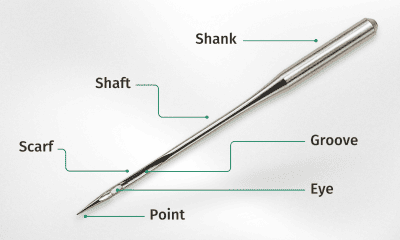
Needle selection is an integral part of the embroidery process. Here’s how each key factor influences which needle is best suited to the job:
65/9 – 75/11 are the industry standard to use with 40 weight thread. Choose a smaller sized needle for finer threads/delicate fabrics, and a larger needle for thicker threads/heavyweight materials.
Refer to the back of your Madeira shadecard for specific needle recommendations.
A standard sharp point tip designed for tightly woven fabrics, such as cottons and silk. For finer or delicate fabrics, consider reducing the needle size to minimise the risk of creating visible holes around the embroidery.
Most commonly used standard ball point designed for knitwear, polo shirts and fleece. The rounded tip helps the needle part through the weave of the fabric rather than perforating the material, helping to reduce the risk of fabric damage.
Medium ball point needles feature a wider, rounded tip designed to gently push aside the larger loops of medium to heavy-weight knitted and stretchy fabrics.
Titanium-coated SAN® needles are a specialised product designed for superior wear resistance and durability under extreme friction, offering strength that lasts up to 5 times longer than standard options.
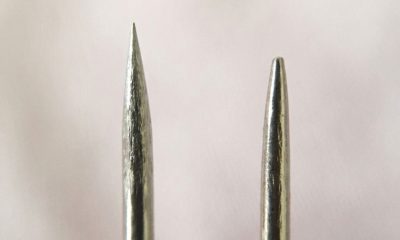
A needle doesn’t have to be visibly damaged to affect your embroidery.
With repeated use, the point can become blunt and microscopic burrs can develop, increasing the risk of thread breaks, looping, uneven stitching and fabric damage.
Change your needle if you notice:
Always keep separate needles for rayon, polyester, and specialist threads like metallics. Different thread fibres wear down needle metal at drastically different rates, creating microscopic friction grooves inside the needle’s eye over time. If you switch that same worn needle to a softer thread, those hidden, razor-sharp grooves will snag, fray, and shred your thread.
To ensure best practice, make needle logging part of your weekly maintenance routine. Use a needle tracker to record the date, needle size, and point type on your machine head to prevent costly thread breaks and garment damage.
If you’re using Madeira embroidery threads and experiencing issues, the thread itself is rarely the cause. More often, the problem lies elsewhere in the embroidery setup.
One of the most common oversights is failing to match the needle’s strength and point to the material being embroidered. Tough materials require a needle that can withstand greater resistance, while different fabrics require the appropriate needle point to penetrate the material correctly.
So, if today’s post taught us anything, it’s that your needle should never be overlooked! The right needle won’t solve every embroidery problem, but it can eliminate one of the most easily overlooked causes of thread breaks, poor stitch quality and fabric damage, making it a no-brainer investment for your business.
© Madeira 2026 | Cookie Settings